
Snow Removal in Muskoka: The 4 PM Check-In Walkway Plan
It's 4:07 PM on a Friday in December. A car turns off the road and crawls up your lane. Inside are four tired people, two hours of highway behind them, a cooler, three duffel bags and a kid who needs the washroom right now.
It snowed after lunch. Not a storm. Just enough to cover the steps, hide a slick patch by the door and make your driveway look like nobody has touched it. The plow didn't come, because it didn't snow enough to trigger the visit. And the sun is about half an hour from setting.
This is where snow removal in Muskoka becomes the first thing your guests remember about your cottage.
The 4:07 PM problem nobody writes into the plow contract
Most cottage owners handle snow the way they did when the cottage was just theirs. Someone plows when it piles up. Someone shovels when they arrive. If it's icy, you throw down salt and watch your step.
That works when you are the one walking in. It falls apart when your guests are. At the cottages we manage, check-in is 4 PM and checkout is 10 AM, and in winter that turnover day is a tight window: cleaners, linens, garbage, heat, and a path that has to be safe by the time the first headlights show up.
A plow contract that triggers at a set amount of snow is built around the snowfall. Your guests' arrival is built around the clock. On the days those two don't line up, nobody shows up to clear the path, and nobody broke the contract.
Why winter check-ins get harder after dark
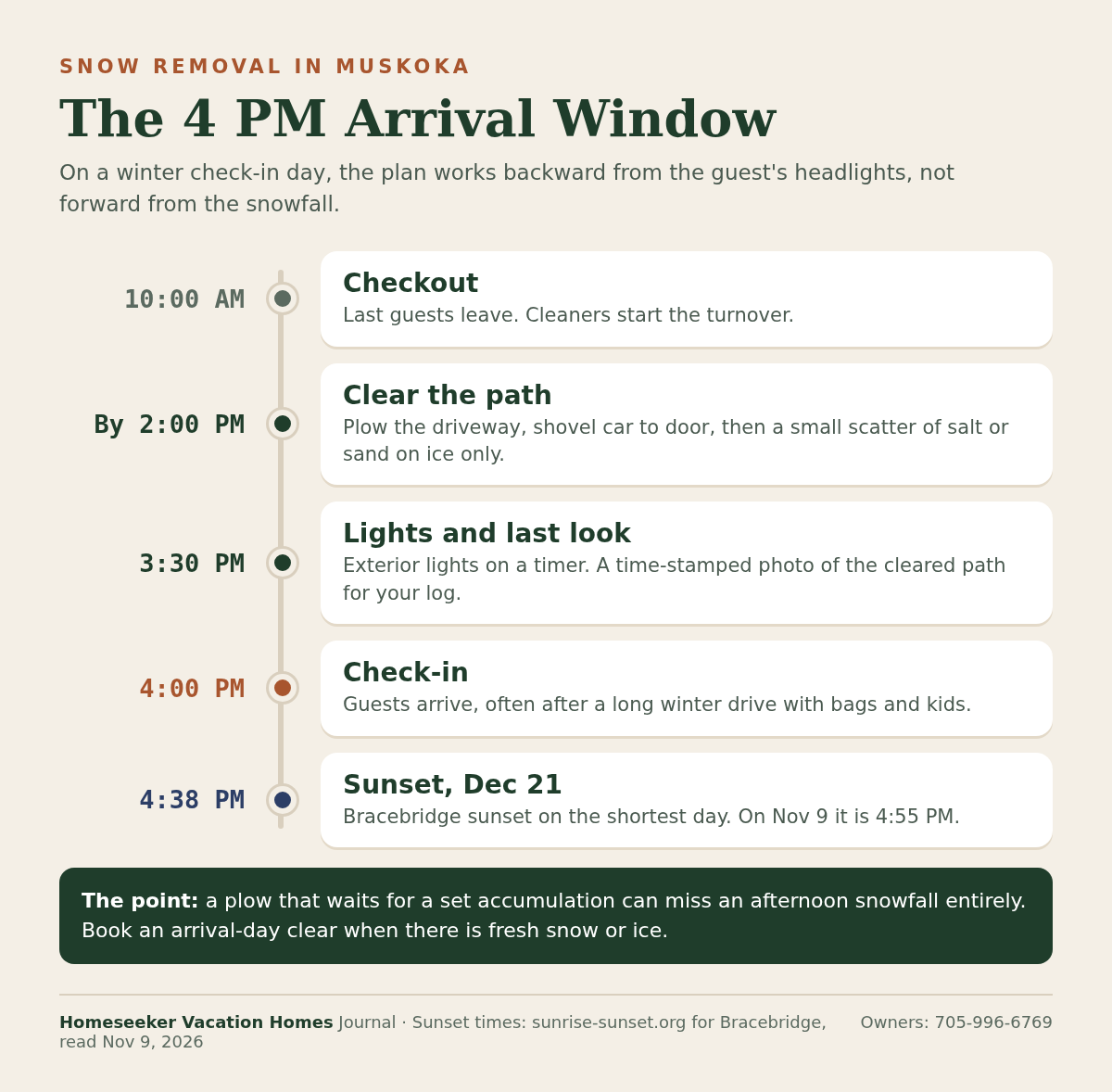
Look at the light. According to sunrise-sunset.org's figures for Bracebridge, read on November 9, 2026, the sun sets at 4:55 PM today. By the shortest day, December 21, it sets at 4:38 PM. A 4 PM check-in in December gives a guest maybe half an hour of daylight to find the door, the steps and the lockbox.
Then add the cold. The District of Muskoka's road salt tip sheet says road salt does not work when the temperature is below about -10°C. On the coldest nights, the salt your guests see on the steps may be doing almost nothing, and ice that melted in the afternoon sun can refreeze right where people walk.
And your guests don't know your property. They don't know the second step is shallow, that the downspout drips onto the walkway, or that the side door is the one everyone actually uses. You know all of that. They find out at dusk, carrying bags.
The salt trap: more isn't safer, and the lake pays for it
When the path looks icy, the instinct is to throw more salt. This month is a good time to rethink that. Friends of the Muskoka Watershed is running its second annual SALTYNovember, a month of events and education on cutting back road salt across Muskoka.
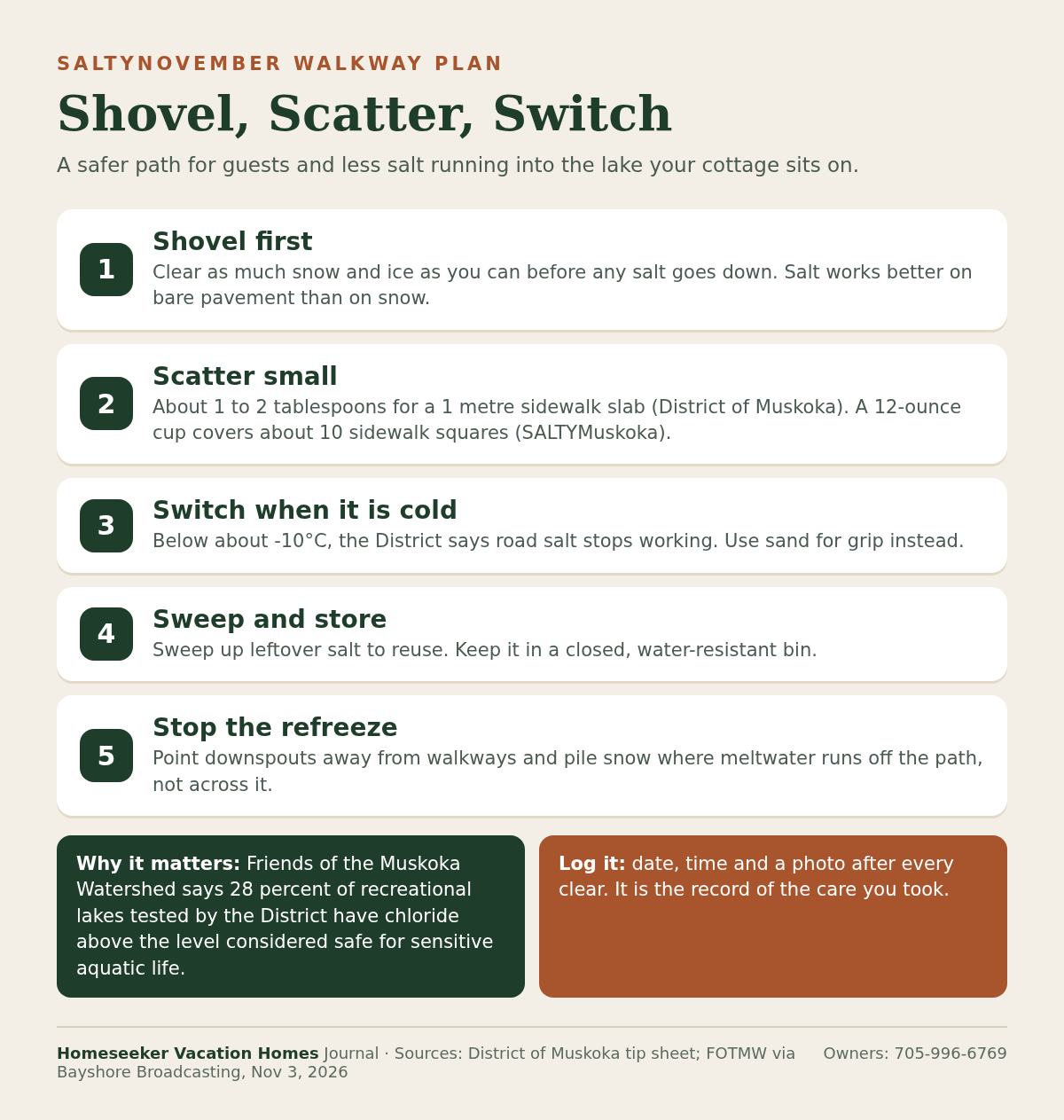
The numbers behind it are worth knowing if your cottage sits on a lake. In its SALTYNovember release, carried by Bayshore Broadcasting on November 3, 2026, the group says 28 percent of the recreational lakes tested by the District of Muskoka have chloride levels above what is considered safe for sensitive aquatic life, and that about 20 percent of the road salt used in Muskoka goes onto parking lots, driveways and sidewalks. It also says studies show most people use five to 10 times more road salt than they need.
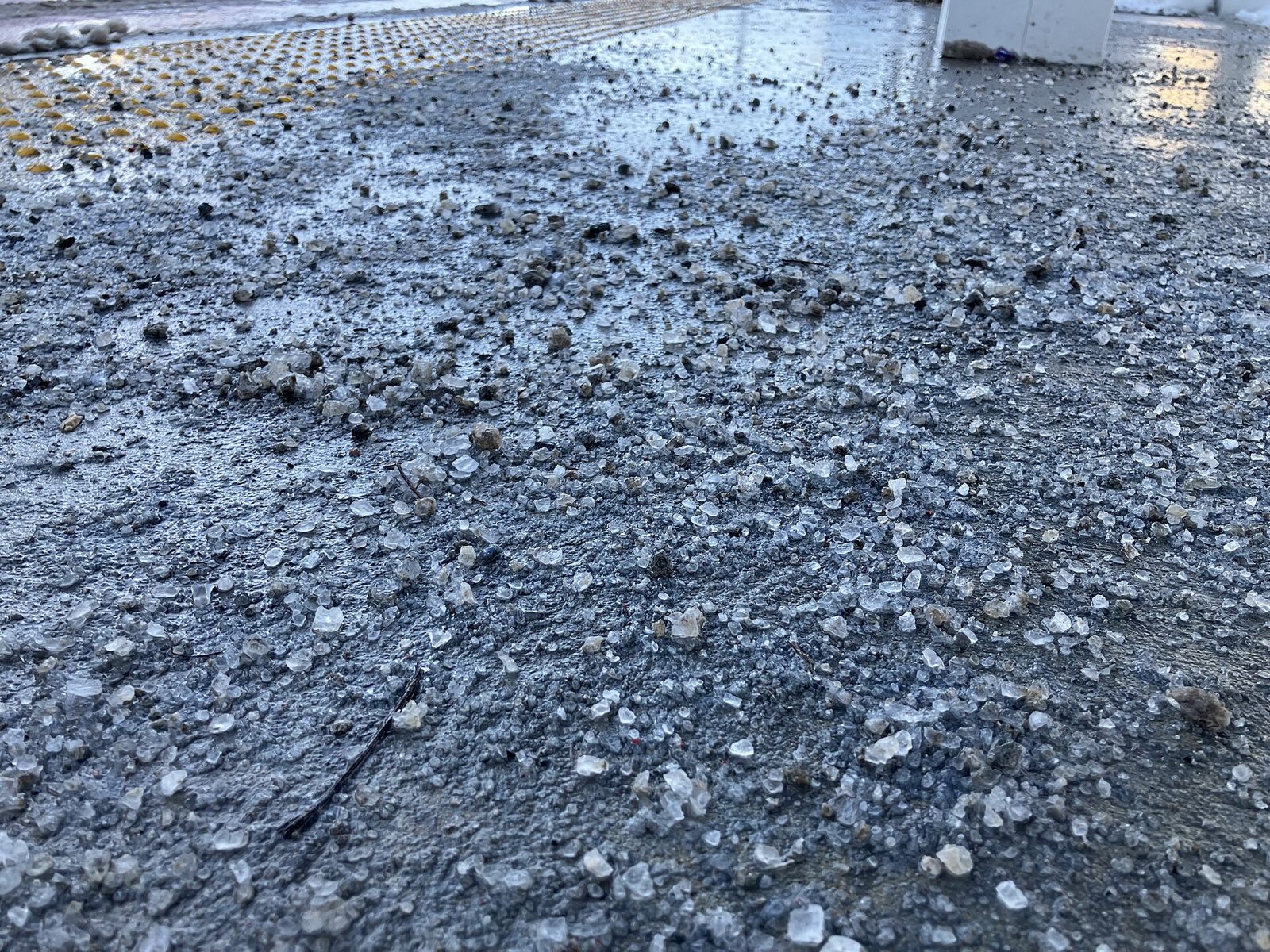
The SALTYMuskoka Green Cup makes the right amount easy to picture: one 12-ounce cup holds enough road salt for 10 sidewalk squares or an average driveway. The District's own tip sheet puts it at about 1 to 2 tablespoons for a 1 metre square, the size of a sidewalk slab. That's a lot less than most buckets by the door.
A safe path isn't the one with the most salt on it. It's the one that was cleared on time.
What Ontario law says about snow, ice and the people you host
This part is general information, not legal advice, but every owner who rents in winter should know the basics. Ontario's Occupiers' Liability Act says an occupier of premises has to take the care that is reasonable in all the circumstances to see that people on the property are reasonably safe. The Act's definition of occupier includes a person who has responsibility for and control over the condition of the premises, and more than one person can be an occupier of the same place.
Two other pieces matter in winter. First, if you hire an independent contractor, the Act says you generally aren't liable for the contractor's negligence if you acted reasonably in choosing a competent contractor and took reasonable steps to check the work was done. Second, since January 29, 2021, a claim for personal injury caused by snow or ice generally needs written notice within 60 days of the injury, with the date, time and location, served on the occupier or the snow removal contractor.
Read those together and a pattern shows up: what you can show about your snow plan matters. Who cleared it, when, and what it looked like when the guests arrived.
Plan for the arrival, not the snowfall
Stop thinking of snow removal as a service you call when it snows. Think of it as part of the turnover, the same as clean sheets and a warm cottage. Every winter check-in gets a cleared path, on time, with a record.
The one-line rule: on a winter check-in day, the path from the parking spot to the front door is cleared before 4 PM, whether or not the plow trigger was reached.
Your plow contract still handles the big storms. The arrival-day clear handles the 4:07 PM problem. And a small, smart scatter of salt or sand handles the ice without dumping a winter's worth of chloride toward the shoreline.
Your winter walkway plan for a rental cottage
Use this as a checklist before the first winter guests arrive. It takes an afternoon to set up and saves a lot of nervous Friday nights.
1. Walk the guest's path and write it down
Start where the guest parks and walk to every door they'll use. Then the paths to the garbage, the woodpile and any hot tub or sauna that stays open in winter. Every one of those needs to be on the clearing list, not just the driveway.
2. Add an arrival-day clear to the plow contract
Keep the accumulation trigger for storms, and add a visit before 4 PM on every winter check-in day when there's fresh snow or ice. Give your contractor the check-in calendar so they can plan around it, and ask them to clear the steps and walkway, not only the driveway.
3. Shovel first, scatter small, switch to sand when it's cold
Salt works best on a cleared surface. Use a cup, not a bucket. When it's colder than about -10°C, switch to sand for grip. If you hire out, ask whether the contractor has Smart About Salt certification, which the District's tip sheet mentions as a way contractors use less salt.
4. Fix the refreeze spots
Point downspouts away from walkways, as the District's tip sheet recommends, and pile snow where it melts off the path, not across it. One redirected downspout can fix the icy patch that shows up every January.
5. Light the way for a 4 PM arrival
Put the exterior lights by the door and steps on a timer or motion sensor so they're on before sunset. It's a small thing that matters most in December, when check-in is so close to dark.
6. Leave guests a shovel and a sand bin
Snow keeps falling after the contractor leaves. A shovel by the door and a closed bin of sand or salt with a small scoop let guests handle a light dusting overnight. Mention them in your arrival message and your house rules.
7. Log every clear with a time-stamped photo
Ask whoever clears the path to send a photo when they finish: date, time, steps and walkway in frame. Keep them in one folder for the season. It's the simplest record of the care you took, and it shows you where the plan keeps slipping.
If you want a second set of eyes on your winter plan before the January check-ins start, call or text 705-996-6769.
Cottage country snow removal: questions owners ask
Who is responsible for snow removal at a rental property in Ontario?
Under the Occupiers' Liability Act, the duty sits with the occupier, which can include anyone with responsibility for and control over the condition of the property, and there can be more than one. Your agreements with any manager and contractor should say clearly who clears what, and when. For your specific situation, talk to a lawyer.
How often should a winter rental cottage be cleared?
Whenever there's a storm, and on every check-in day with fresh snow or ice, even a light dusting. The check-in day clear is the one most contracts miss.
Is it fine to just leave salt for guests?
Leave a shovel and a small bin of sand or salt for light snow overnight, but don't make guests responsible for the arrival path. That should be clear before they pull in.
What else should be ready for winter guests?
Working carbon monoxide alarms, a clear plan for garbage and a guest message about the drive. Our guides on the Ontario carbon monoxide alarm rule for cottage rentals, handling cottage garbage and winter driving to cottage country cover each one.
The cottage your guests remember
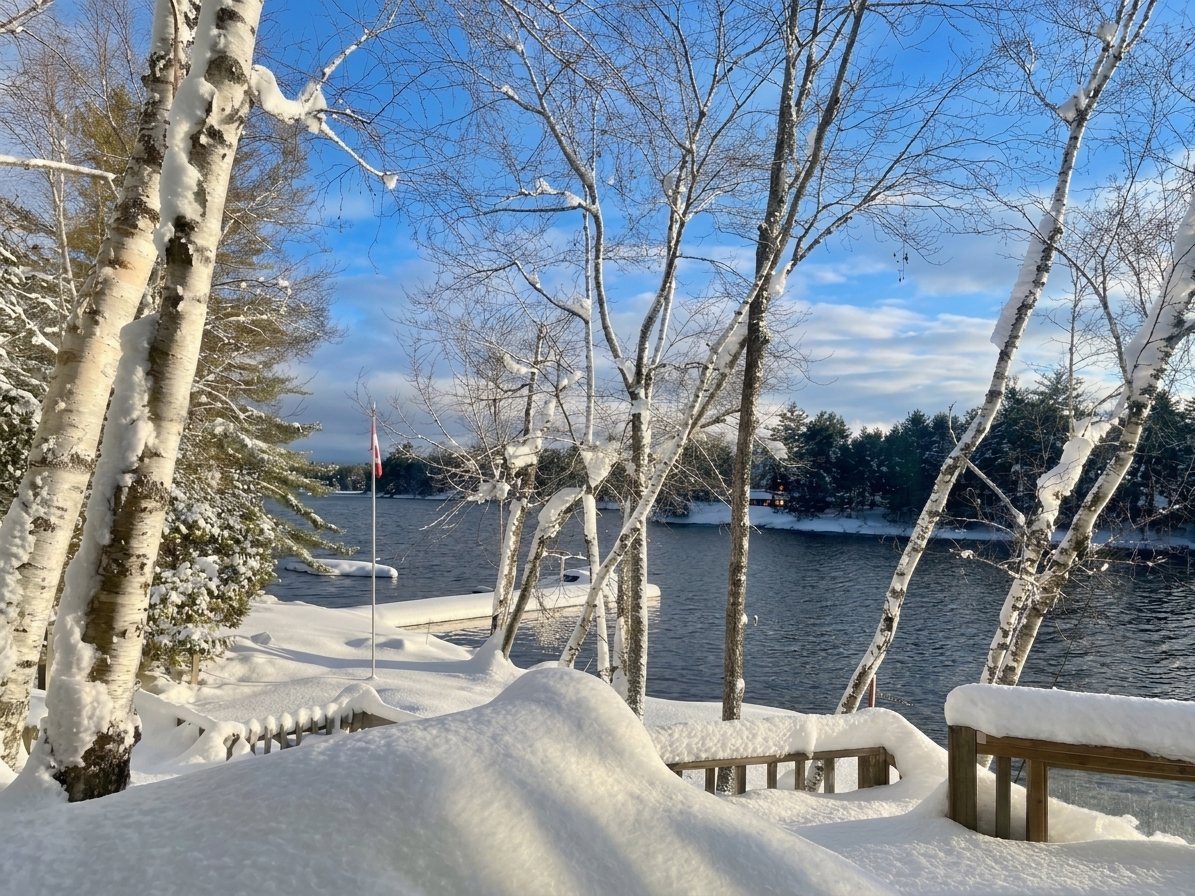
Nobody leaves a five-star review because the walkway was clear. But plenty of guests remember the night it wasn't. Get the path right at 4 PM and the rest of the weekend gets to be about the fireplace, the snow on the lake and the quiet.
Thinking about renting your cottage through the winter for the first time? Start with how to rent out your cottage in Muskoka, see how owners rent it out and still use it, or read about our cottage rental management.
About this guide: sunset times are from sunrise-sunset.org for Bracebridge, read November 9, 2026. Road salt figures are from Friends of the Muskoka Watershed (SALTYMuskoka page and SALTYNovember release, Bayshore Broadcasting, November 3, 2026) and the District of Muskoka's road salt tip sheet. Legal points are summarised from Ontario's Occupiers' Liability Act on ontario.ca e-Laws, read November 9, 2026. This is general information for cottage owners, not legal advice.


