
Toronto Airbnb Registration Number: How to Check a Listing
You found it. A bright Toronto place for a winter weekend in the city: great photos, a cozy couch, an easy walk to dinner. Your thumb is hovering over Reserve.
Now scroll down one more time and look for a single line most guests never read: a code that starts with STR. That little line is the Toronto Airbnb registration number, and whether it's there tells you more about your weekend than any photo in the gallery.
The one line on a Toronto Airbnb listing most guests skip
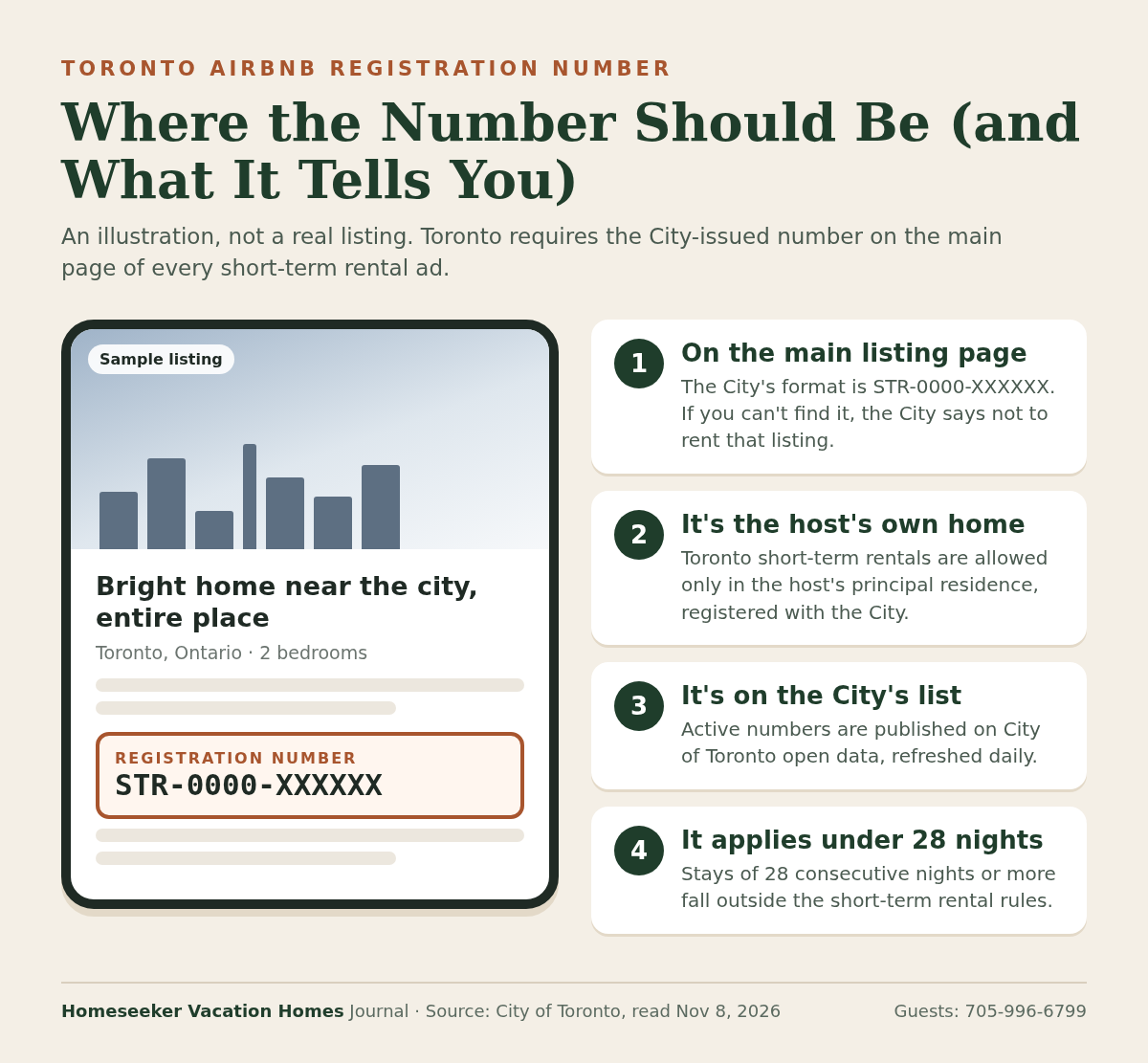
Toronto requires every short-term rental to be registered with the City. The City's own guest advice, in its 10 Things You Should Know About Short-Term Rentals, is blunt: check that the City-issued registration number is included in the listing or ad, and do not rent short-term rentals that do not display it.
The format to look for: STR-0000-XXXXXX. That is the City of Toronto registration number format: the letters STR, four digits, then six characters.
The bylaw goes further. Toronto's short-term rental rules (By-law 503-2024) say the main page of any short-term rental ad has to prominently display the operator's registration number. So you shouldn't have to dig through house rules or message the host to find it.
And you're not checking a rare thing. The City's open data list of active registrations had 8,615 registration numbers when we read it on the morning of November 8, 2026.
Why a missing registration number can wreck your weekend
Here's the part nobody thinks about until it happens. The City works with booking platforms to find and remove listings without valid registration numbers. On its short-term rental companies page, the City says licensed platforms must cancel all future reservations for unregistered operators within 24 hours of a City request.
Picture the timing. Your confirmation email arrived weeks ago. Friends have bought train tickets. Then, a few days out, a cancellation notice lands, and you're hunting for a new place in the middle of a cold snap with everyone else who had the same idea.
A great listing with no registration number isn't a deal. It's a maybe.
There's a quieter issue too. In Toronto, short-term rentals are only allowed in the host's principal residence, the home they actually live in and use for bills, ID and taxes. A listing that can't show a number may not be playing by that rule, and that's not the stay you planned for.
The epiphany: the number is your receipt for the rules
Most guests treat the registration number like fine print. Flip that. The number is the one piece of the listing the City stands behind.
To get one, a Toronto host registers their principal residence with the City, and the registration is tied to that address. Registered rentals can be inspected by the City every year. During your stay, the host has to give you a contact who is available 24 hours a day, and a diagram of the building's exits has to be physically posted in the rental.
So you're not checking a number for the sake of it. In about a minute, you're checking that the place you love in the photos is playing by the same rules as everyone else.
How to check a Toronto Airbnb registration number in 60 seconds
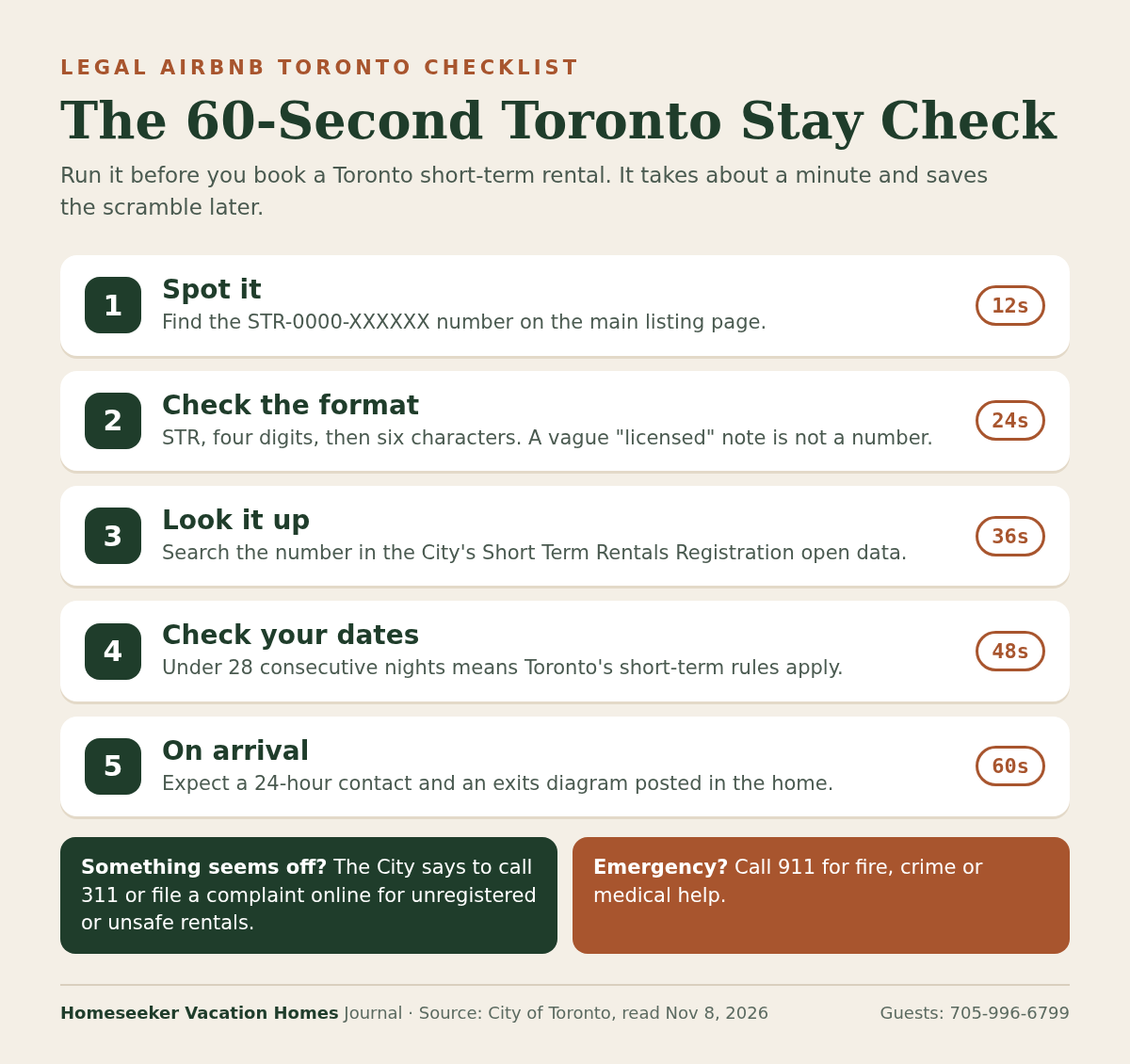
Here's the quick routine. Run it on any Toronto short-term rental before you hit Reserve.
1. Find the number on the main listing page
Look for a line labelled registration or licence number, in the format STR-0000-XXXXXX. If the listing only says something vague like "fully licensed" with no number, treat it as missing.
2. Check that it looks right
STR, four digits, then six characters, separated by dashes. A number in a completely different format is a reason to ask the host before you go any further.
3. Look it up on the City's list
The City publishes every active registration number in its Short Term Rentals Registration open data, refreshed daily. It also lists the address and property type, but no operator names. Search the number. If it isn't there, ask the host why before you reserve. After you book and receive the address, you can check that the two match.
4. Match the rules to your dates
In Toronto, a short-term rental means a stay of less than 28 consecutive days. Booking 28 nights or longer, like a furnished monthly stay? Those rentals fall outside the short-term rental rules, so you may not see an STR number at all. Hotels and motels aren't covered by these rules either.
5. Know what to expect when you arrive
Look for the 24-hour contact information and the posted exits diagram. You may also see the Municipal Accommodation Tax as its own line: the City's rate is 6% for stays beginning August 1, 2026, according to the City's MAT page, and booking platforms can collect it on the host's behalf.
6. If something feels off, use 311
The City says to call 311 or submit a complaint online if a short-term rental is operating without registration, isn't a principal residence or seems unsafe. For a fire, a crime or a medical emergency, call 911.
Toronto short-term rental rules: what guests ask most
Is Airbnb legal in Toronto?
Yes, within the rules. A host can short-term rent only their own principal residence, must register with the City and has to show the registration number on every listing. Full details live on the City's operators and hosts page.
Can a Toronto host rent out the whole home all year?
No. An entire home can be rented as a short-term rental for up to 180 nights per calendar year. Hosts who stay in the home can rent up to three bedrooms with no night limit.
Does this apply across the Greater Toronto Area?
These are City of Toronto rules. Other cities in the Greater Toronto Area set their own, so check the local city's website for a stay outside Toronto.
Do I have to do anything as a guest?
Mostly, just look. Check the number, follow the house rules and be a good neighbour on noise, parking and garbage, which the City asks of every guest.
City weekend or lake weekend?
Toronto is brilliant for a winter weekend of restaurants, shows and galleries. But if what you really want is snow outside the window, a fire going and nowhere to be, cottage country is closer than most people think. Our guide to Muskoka cottage rentals near Toronto sorts stays by distance, and driving to cottage country in winter covers the trip up.
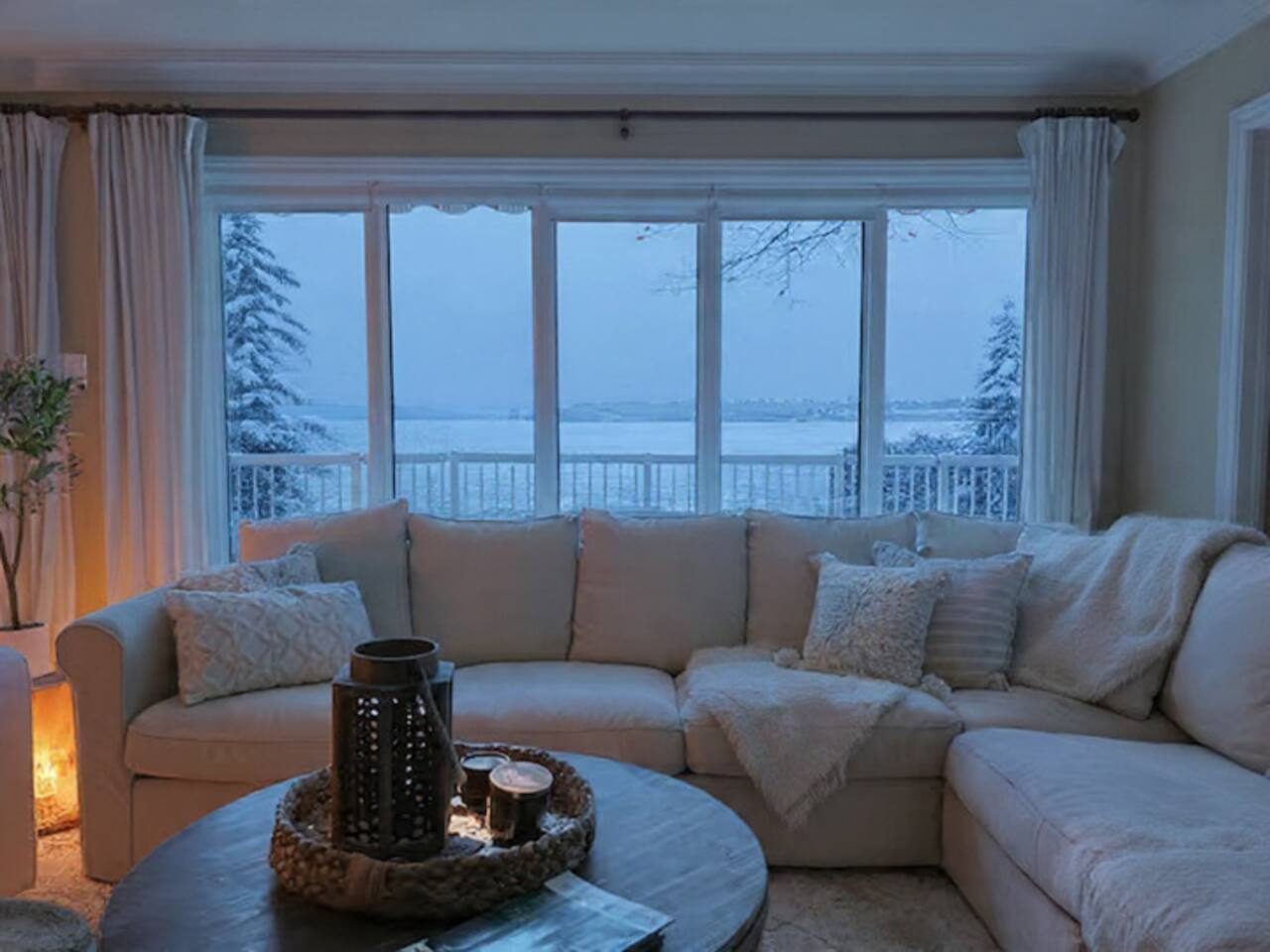
Once you're there, the cottage does the entertaining. Steal ideas from our winter cottage game night guide, or browse more winter cottage rentals in Muskoka. Heading toward the bay? Our Georgian Bay and Parry Sound cottage guide has the lay of the land.
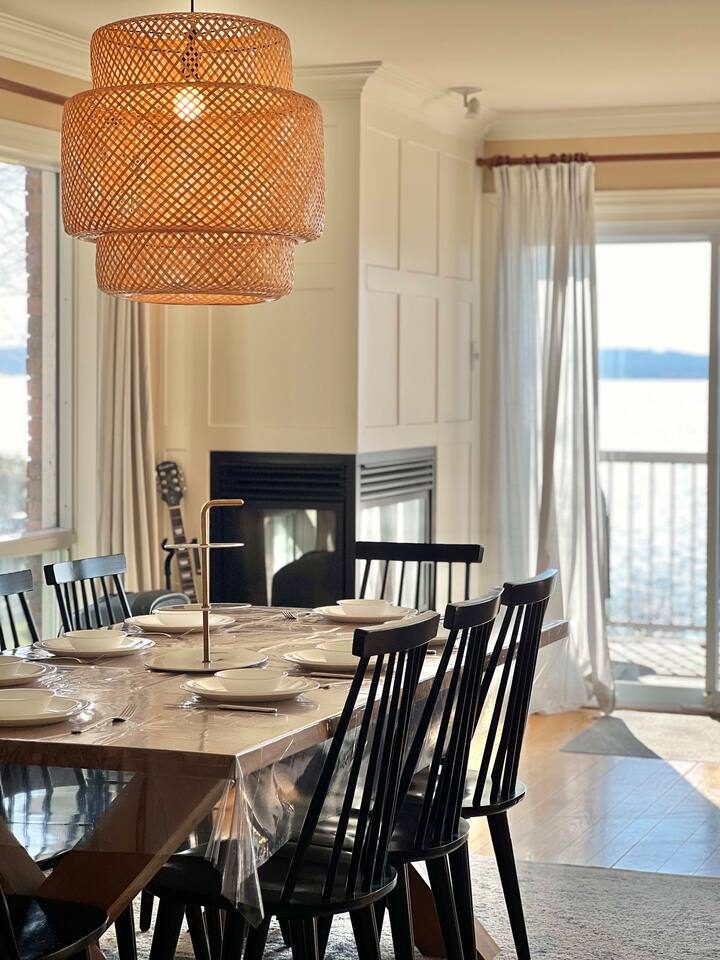
About this guide: Toronto rules are summarised from City of Toronto pages and open data, read on November 8, 2026. Rules can change, so check toronto.ca before you book. This is general information for guests, not legal advice.


