
Lake Ice Safety: How Thick Does Ice Need to Be to Walk On?
The lake outside the cottage window looks frozen solid, and someone in your group is already pulling on boots. Before anyone steps off the shore, here are five checks that tell you what that ice can really hold.
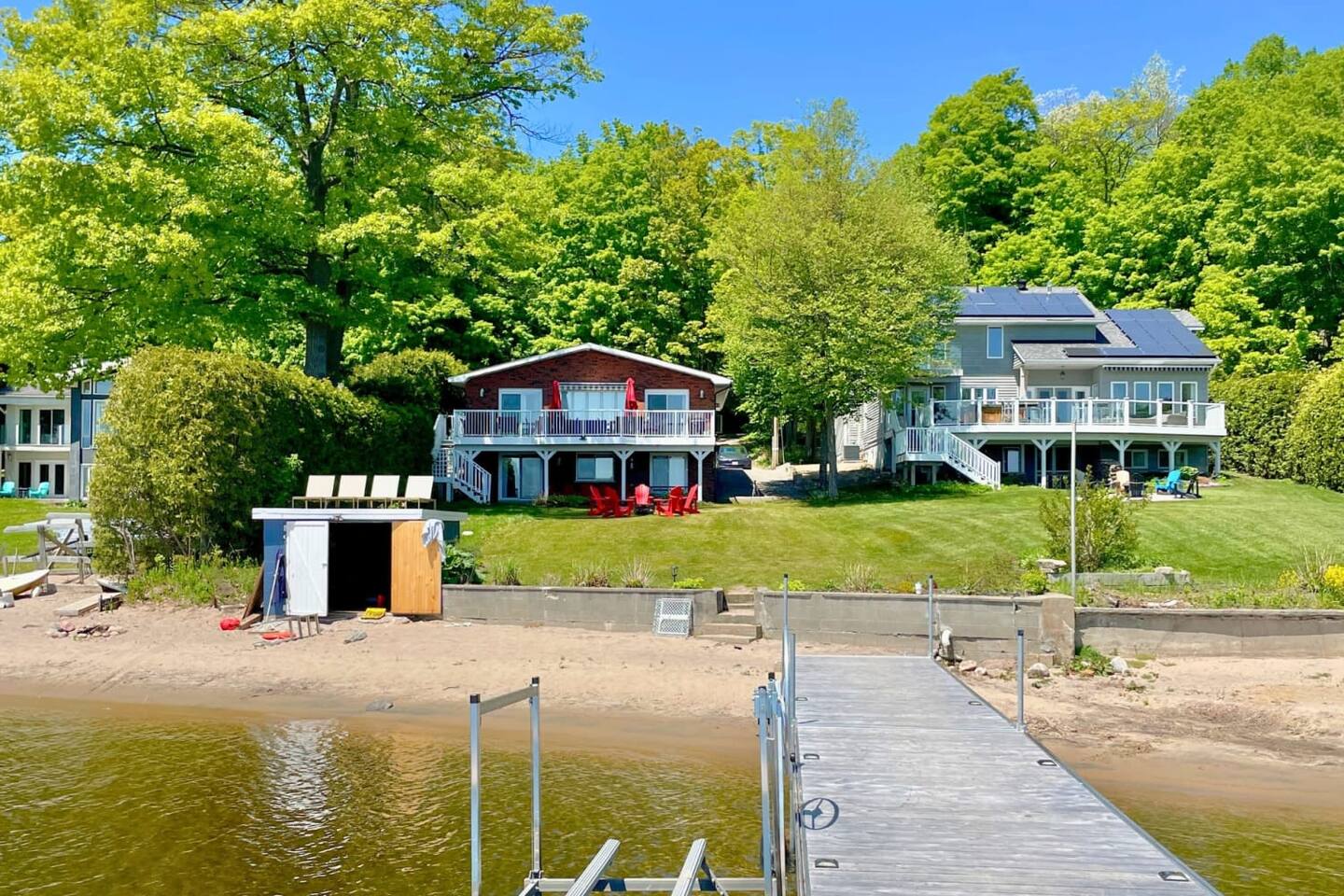
The first frozen morning at the cottage
You wake up, pour a coffee and look out. Overnight the lake has gone white and still. It looks like a giant rink, and it's right there.
The kids want to slide on it. A friend wants to walk out to the point. The dog is already at the door. Everyone is looking at you, because it's your trip.
Why lake ice fools almost everyone
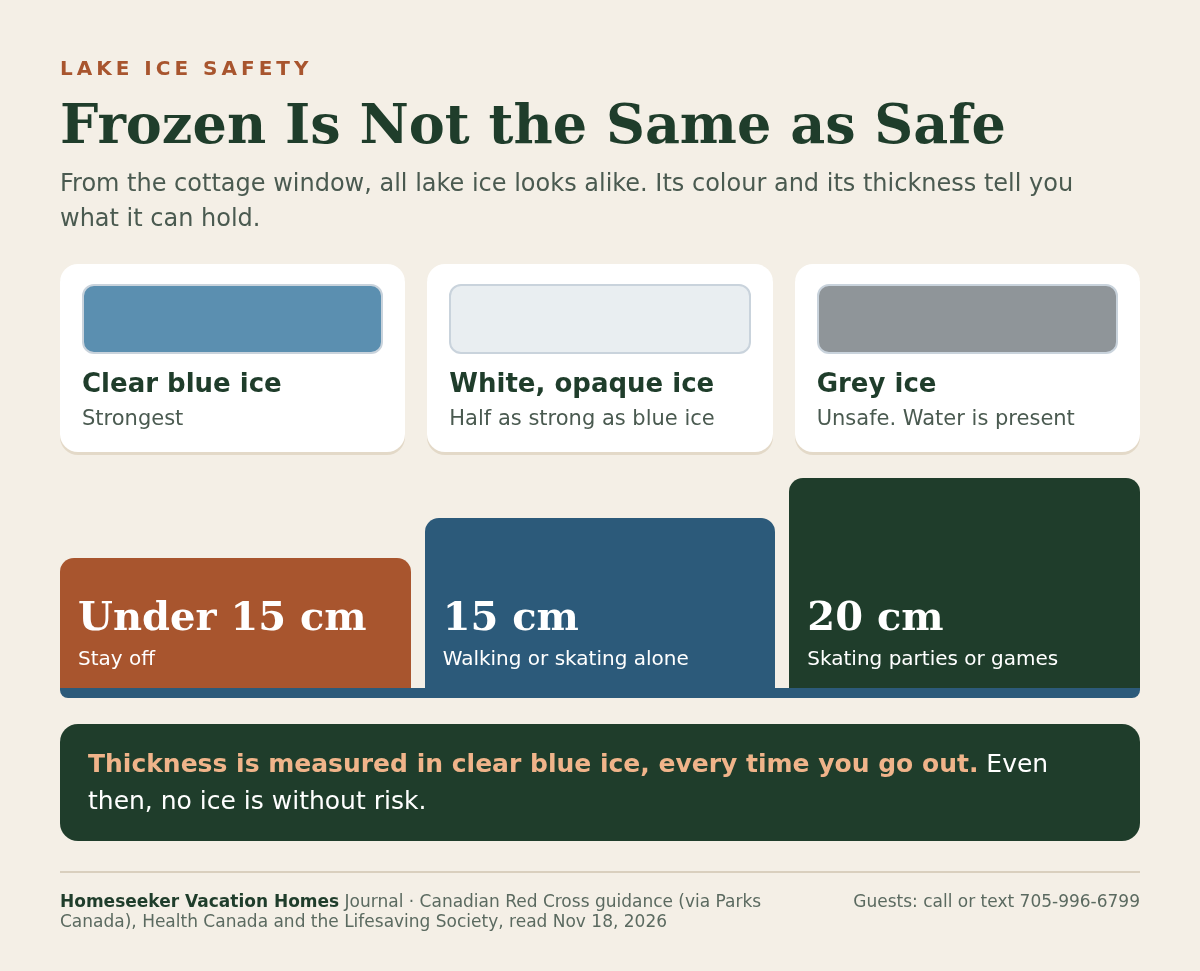
From the window, all ice looks the same. It isn't. The Canadian Red Cross guidance shared by Parks Canada says ice thickness depends on the water's depth and size, currents, changing air temperature and even "logs, rocks and docks absorbing heat from the sun."
So the ice by your own dock may be the weakest ice on the lake. The Lifesaving Society adds that the quality and thickness of ice can change very quickly, and its appearance can be misleading. It reports that almost 2 in 5 ice-related deaths happened on thin ice.
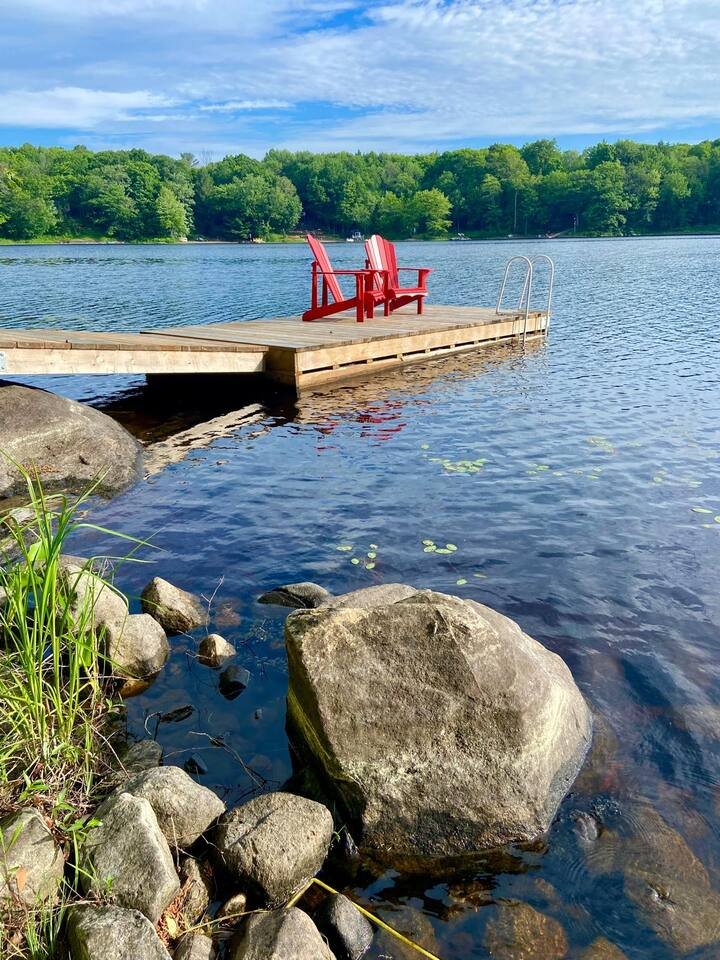
Treat the ice like a view
The question is not "does it look frozen?" You can't answer that from shore. The question is "has someone who knows this lake checked this ice today?"
The Lifesaving Society says to talk to locals, such as a bait shop operator or resort owner, about ice conditions, thin ice and open water when you are somewhere new. Police say the same thing: the Ontario Provincial Police told the Windsor Star to check with local ice fishing clubs and businesses, and that there is still no guarantee the ice is safe.
How thick does ice need to be to walk on? 5 checks
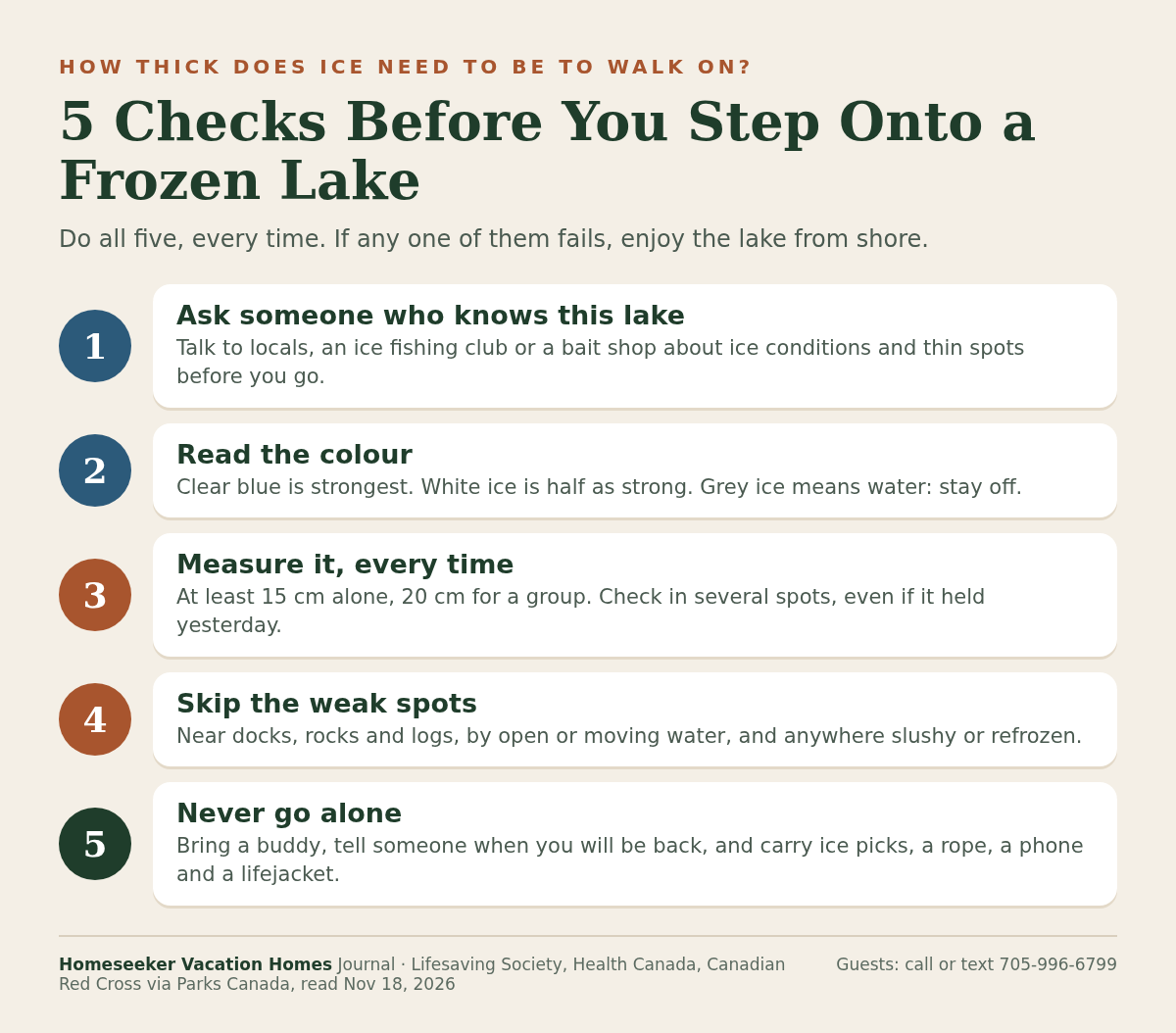
If you do plan to go out, run all five checks every time. If any one fails, enjoy the lake from shore.
1. Ask someone who knows this lake
Ask your host, a local ice fishing club or a bait shop what the ice is like this week and where the thin spots are. Your host can share what they know, but no one can promise that lake ice is safe.
2. Read the colour
Clear blue ice is the strongest. White, opaque ice is half as strong as blue ice. Grey ice is unsafe, because the grey means there is water in it. That's from the Red Cross guidance shared by Parks Canada.
3. Measure it, every time
Parks Canada's Red Cross guidance calls for 15 cm of ice for walking or skating alone and 20 cm for skating parties or games. Health Canada uses the same numbers and says to check the ice every time you go out, even if it was safe the day before. The Lifesaving Society of Alberta and the Northwest Territories also says to measure the ice in several spots. Some groups, like the Lifesaving Society, list 10 cm as a minimum for one person, but this post uses the higher Red Cross and Health Canada number to be safe.
4. Skip the weak spots
Stay away from ice near docks, rocks and logs, and from open water or moving water. The Lifesaving Society says to avoid slushy ice, ice that thawed and refroze, and to avoid going out at night or when you can't see well.
5. Never go alone, and bring a kit
Take a buddy and tell someone where you are going and when you'll be back. The Lifesaving Society says half of ice-related deaths happened when the person was alone. Carry ice picks, a rope and a charged phone, and wear a brightly coloured lifejacket over your winter layers.
Bringing the dog? Keep it close to shore. The Lifesaving Society warns not to go after a dog that falls through, because year after year owners drown while the dogs usually survive.
If the ice breaks: the 1-10-1 rule
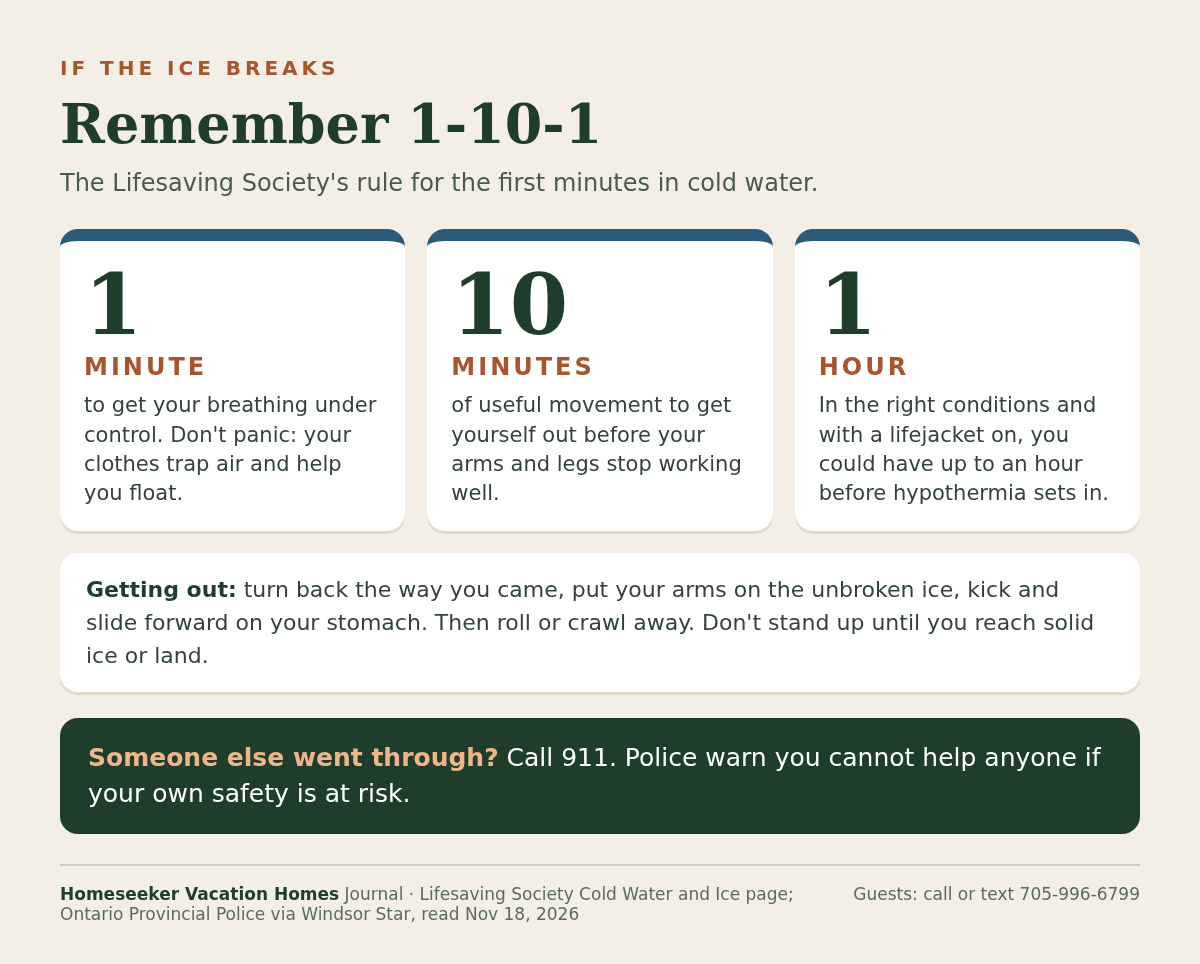
Know this before you need it. The Lifesaving Society's 1-10-1 rule: one minute to get your breathing under control, ten minutes to get yourself out before you lose the ability to move well, and, with a lifejacket in the right conditions, up to an hour before hypothermia sets in.
Plenty of winter happens on shore
Most of the best winter cottage moments never need the ice at all. A sauna, then a cold walk under the stars. A fire with everyone in parkas. A games night while the snow comes down. Our guide to things to do at a cottage in winter and our 2-day Muskoka winter itinerary are full of ideas.
Riding instead? The OPP asks snowmobilers to stay on designated trails. Our Muskoka snowmobile trails guide covers permits and trail conditions, and our winter driving guide covers the drive up.
Lake ice safety: quick answers
How thick does ice need to be to walk on?
The Canadian Red Cross guidance shared by Parks Canada says 15 cm of ice for walking or skating alone and 20 cm for skating parties or games. White ice is only half as strong as clear blue ice.
Is the ice near the dock safe?
Treat it as the weakest ice on the lake. Docks, rocks and logs absorb heat from the sun, which can thin the ice around them.
Can we walk on the lake at our rental cottage?
Ask your host first and follow any house rules. Then ask locals about this week's ice. If you are not sure, stay on shore.
What should we bring if we go out?
A buddy, ice picks, a rope, a charged phone and a lifejacket, plus a plan someone on shore knows about.
Enjoy the lake, your way
A frozen lake is one of the most beautiful things you can see from a cottage window. Look first, ask second, and step out only when the checks say yes. Want more choices for a winter stay? Start with our guide to Muskoka cottage rentals or our winter cabin rentals guide.
About this guide: ice colour, the 15 cm and 20 cm thickness guidance and the note on docks, rocks and logs are from Canadian Red Cross guidance on the Parks Canada Riding Mountain National Park ice page. The same thickness numbers and the advice to check every time are from Health Canada's "Winter sports and recreation safety" page (published December 8, 2025). Talking to locals, thin ice deaths, going alone, dogs, the safety kit, getting out and the 1-10-1 rule are from the Lifesaving Society's "Cold Water and Ice" page. Measuring in several spots is from the Lifesaving Society of Alberta and the Northwest Territories. The OPP advice is from the Windsor Star, December 12, 2025. All sources read November 18, 2026. This guide is general safety information, not a report on any lake's current ice. Cottage details are from each cottage's listing and our property records.


