
How to Keep Cottage Pipes From Freezing Between Winter Stays
Your winter guests check out on Sunday. The next group arrives Friday. For four days, the only thing keeping your cottage pipes from freezing is a furnace no one is watching. Here is how to keep cottage pipes from freezing through those empty days, in five steps.
The question most owners ask too late
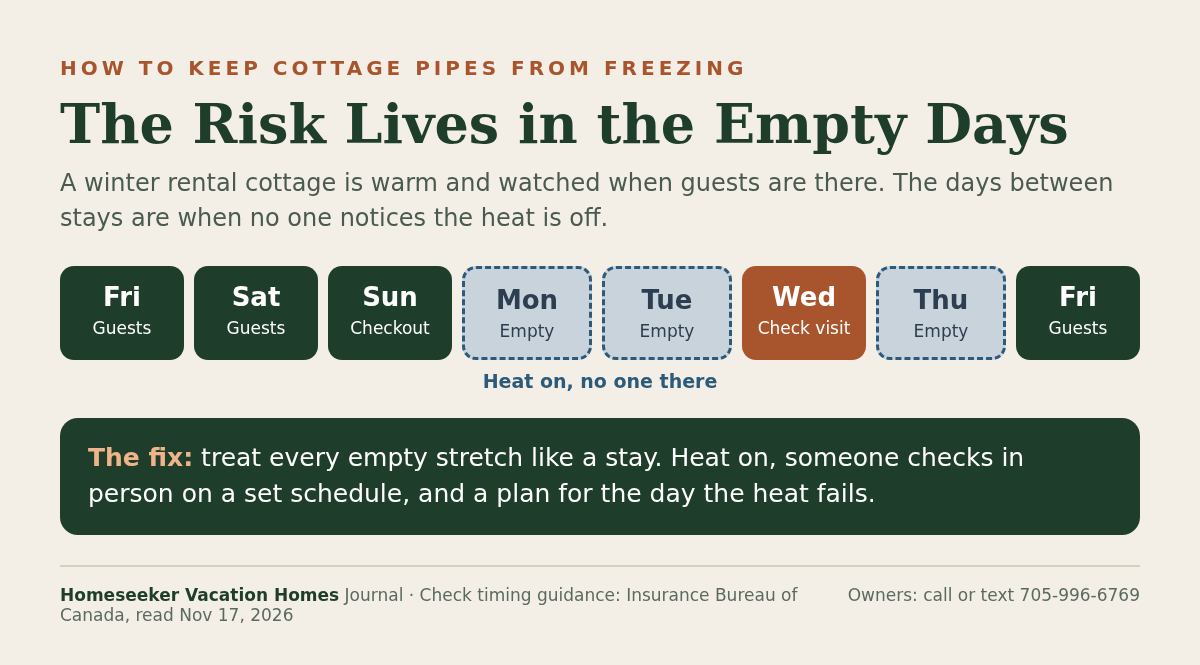
Picture a Wednesday in January. The cottage is empty. Snow is falling on the lake, the thermostat is set, and you are two hours away at work.
Now picture the furnace quitting at 2 AM. No alarm goes off in your kitchen. No guest calls. The house cools a little more each hour, and the first person to find out is the family pulling into the driveway on Friday.
Most owners plan winter around the stays: the cleaning, the snow, the check-in. The days in between get a thermostat setting and a hope.
Why a heated cottage is not the same as a safe cottage
Heat only protects your pipes while it keeps running, and an empty cottage cannot tell you when it stops.
The Insurance Bureau of Canada says standard home policies cover damage from frozen and burst pipes when the pipes are in a heated part of the home and reasonable steps are taken to maintain heat. It also says most policies spell out how often a competent person must check the home to make sure the heat is on. For cottages, its guide to seasonal property coverage notes that coverage may be more limited when a property sits unoccupied for long stretches, and frozen pipes may not be covered.
The question to ask is who would know if the heat went off.
Treat the empty days like a stay
A cottage with guests in it is warm and watched. Someone notices a cold room, a drip or a strange smell within hours, and they message you.
A cottage between stays has no one inside. So give it a visitor. The IBC says that when you are away in winter, someone should check your home every three days to make sure the pipes are not frozen, and that skipping checks could lead to a claim being denied. Your own policy may set a different schedule, so read it and follow it.
The one-line rule: an empty winter cottage needs a visitor, not just a thermostat. Treat every gap between stays like a stay.
How to keep cottage pipes from freezing in 5 steps
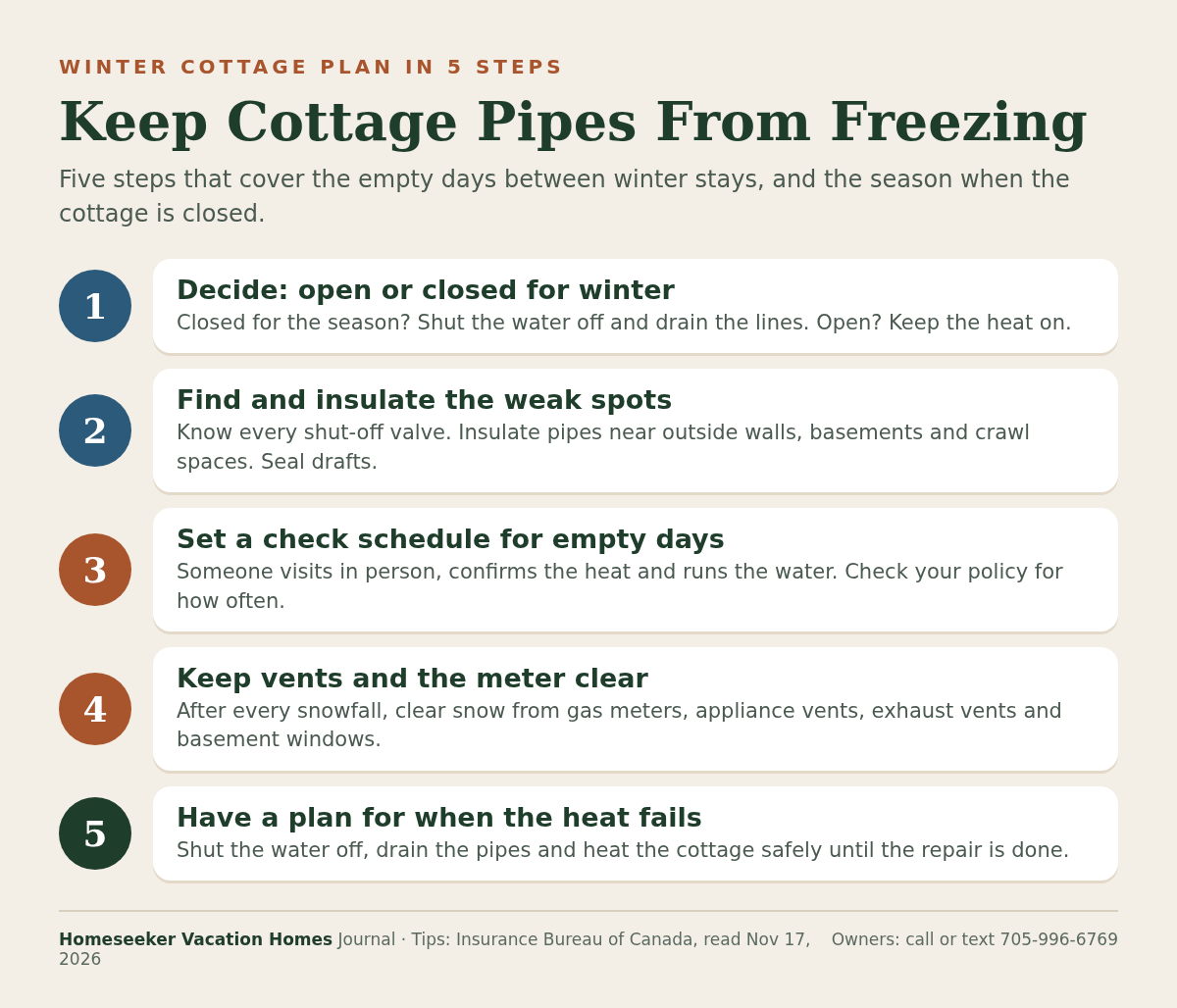
These five steps work whether you rent all winter, rent some weekends or use the cottage yourself.
1. Decide: open for winter, or closed
If the cottage will sit empty for the season, winterizing a cottage is the safer path. The IBC says a vacant home should have the water supply shut off and the lines drained. If you plan to rent or visit, keep the heat on and move to step 2.
2. Find and insulate the weak spots
Know where every water shut-off valve is, and make sure your cleaner and contractors know too. The IBC suggests pipe insulation, especially for pipes near outside walls, basements and crawl spaces, and sealing drafts around windows and doors.
3. Set a check schedule for the empty days
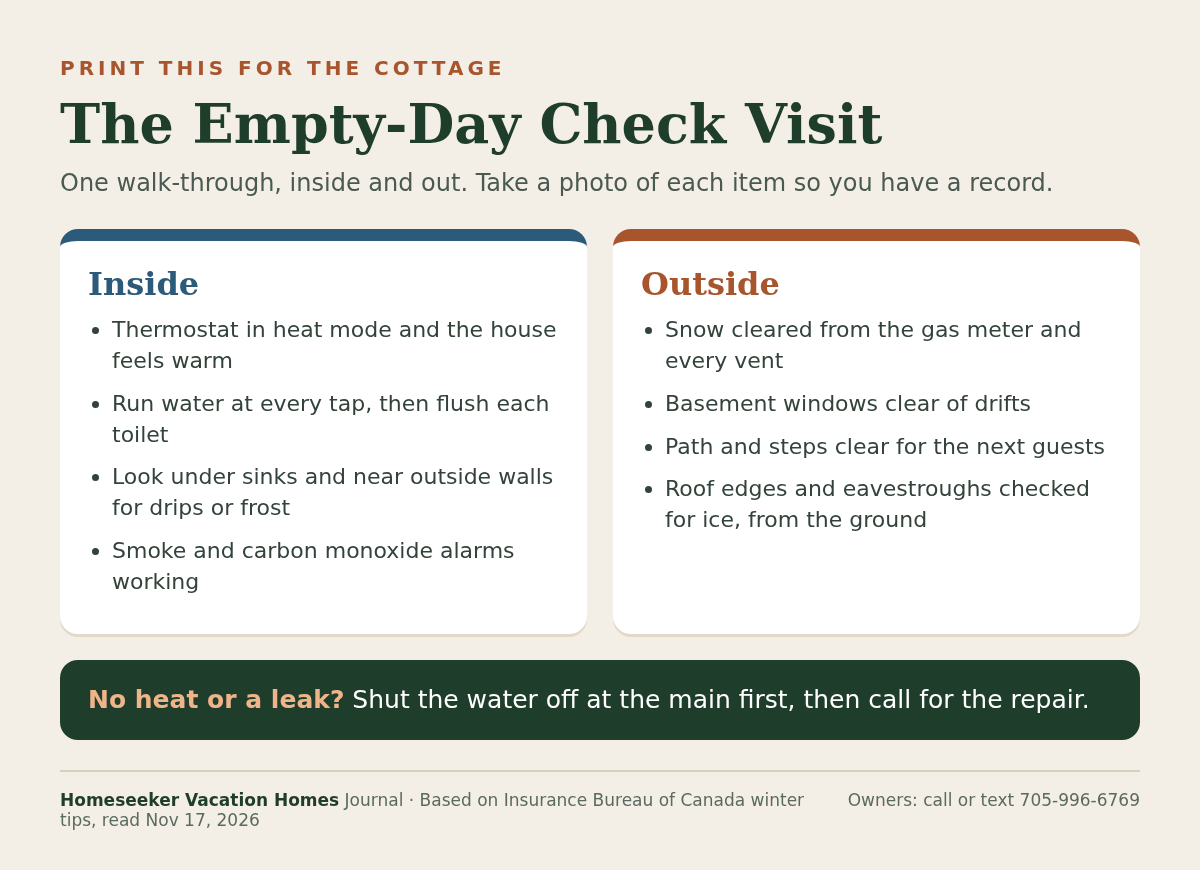
Put the check visits on the calendar the same way you put the stays there. On each visit, confirm the thermostat is in heat mode, run water through the taps and flush the toilets, and look under sinks and along outside walls. The IBC recommends running water through all plumbing fixtures regularly.
4. Keep the vents and gas meter clear
Snow can bury more than the driveway. After a storm, the IBC says to keep snow away from gas meters, gas appliance vents, exhaust vents and basement windows. While you are there, test the smoke and carbon monoxide alarms. Our post on the carbon monoxide alarm rule for cottage rentals covers where they go.
5. Have a plan for the day the heat fails
If the furnace or heat pump breaks, the IBC says to shut off the water supply, drain the pipes and find a safe way to heat the home while it is repaired. Decide now who makes that call, who has the key and which trade you phone first. Write it down now, not at 2 AM.
Want a hand setting up winter check visits for your cottage? Call or text 705-996-6769 and we will walk through it with you.

Keeping cottage pipes from freezing: quick answers
How often should someone check an empty cottage in winter?
The Insurance Bureau of Canada suggests every three days when you are away in winter. Your policy has the final word, so check its wording.
Should I drain the pipes or keep the heat on?
If no one will use the cottage until spring, shutting off the water and draining the lines is the safer choice. If you rent in winter or visit often, keep the heat on and add regular check visits.
What should a winter check visit include?
Heat on and the house warm, water run at every tap, a look for drips or frost, alarms working, and snow cleared from vents, the gas meter and basement windows. Our winter walkway plan for rental cottages covers the outside.
Where we help cottage owners in winter
If you rent your cottage, the empty days are part of the plan we run for you, along with guests, cleaning and snow. Read our owner's winter plan for monthly cottage rentals, or see how to rent out your cottage and still use it.
If you keep the cottage for your family, our Muskoka cottage property management service is built for you: property checks with photos or video sent the same day, and the heat on before you drive up. We work with owners across cottage country, including Parry Sound cottage rental management, Georgian Bay cottage rental management, Lake Simcoe cottage rental management and Lake of Bays cottage management.
Your cottage, watched all winter
A frozen pipe rarely starts on the day guests are there. It starts on a quiet Wednesday when no one is looking. Put someone on the calendar for those days, and your cottage stays as warm on Friday as it was on Sunday.
About this guide: frozen pipe coverage, vacant home and furnace failure guidance are from the Insurance Bureau of Canada article "Does my insurance cover damage caused by extreme cold?" (January 17, 2025). The every-three-days check is from the IBC article "What is covered when I go on a March Break vacation?" (March 12, 2026). Seasonal property limits are from the IBC article "What to Know About Seasonal Property Insurance" (June 15, 2025). Pipe insulation, shut-off valves and clearing vents are from the IBC page "Winter Storm Warning: What Homeowners Should Do Now to Protect Their Property." Running water through fixtures and testing alarms are from IBC winter tips in its January 27, 2017 release on frozen pipes. All sources read November 17, 2026. This guide is general information, not advice about your own policy. Cottage details are from our property records.


